Merged Mining LTC and DOGE: How Pools Calculate Your Rewards
In the competitive world of cryptocurrency mining, merged mining Litecoin and Dogecoin stands out as one of the smartest ways to boost your earnings without extra hardware or electricity costs. At Miningpoolstats, we help miners across the United States find the right setup for ltc mining and doge mining success.
Whether you run a home operation with Scrypt ASICs or manage a larger farm, understanding how merged mining works can significantly increase your daily profits. This guide breaks down everything from the basics to reward calculations, pool comparisons, and practical tips for 2026.
Compare Top LTC DOGE Merged Mining Pools Now on Miningpoolstats →
What Is Merged Mining and How It Works in Practice
The Basics of Merged Mining for Litecoin and Dogecoin
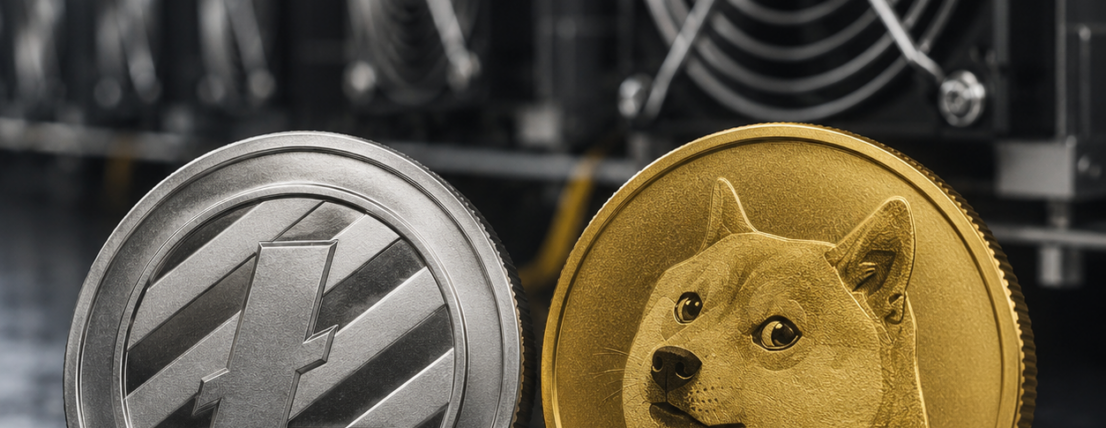
Merged mining, also known as AuxPoW, allows miners to secure two different blockchains at the same time using the exact same computational work. Litecoin serves as the primary chain, while Dogecoin acts as the auxiliary chain. Both networks use the Scrypt algorithm, making this combination perfect and highly efficient.
When your miner solves a hash, the solution is submitted to both networks. If it meets the difficulty requirements for Litecoin, you earn the LTC block reward. The same work can also qualify for a Dogecoin block, giving you additional DOGE rewards. This means no splitting of hashrate and no extra power consumption.
In 2026, skipping merged mining for litecoin mining or dogecoin mining leaves significant money on the table. Many miners report 30-60% higher effective revenue by enabling both coins through a compatible pool.
Step-by-Step Process of How Merged Mining Operates
Your Scrypt ASIC miner connects to a single stratum server on a supporting pool. The pool provides work templates for Litecoin. As your hardware generates shares and potential blocks:
- The solution is first validated against Litecoin rules.
- If it also satisfies Dogecoin’s AuxPoW requirements, it gets submitted there too.
- The pool handles broadcasting blocks to both networks when successful.
- Rewards from both chains flow into your pool account balance.
This seamless process requires almost no extra configuration beyond setting payout addresses for both LTC and DOGE. Modern pools automate most of the complexity, so you focus on running stable hardware and monitoring performance.
For US miners, low-latency servers in North America make a big difference in reducing stale shares and improving overall efficiency. Reliable connectivity ensures your hashrate contributes fully to both networks around the clock.
How Pools Distribute Rewards Between LTC and DOGE
Reward calculation in ltc doge merged mining pool setups follows proven methods like FPPS (Full Pay Per Share) or PPLNS (Pay Per Last N Shares). The pool tracks every share you submit and attributes proportional value from both chains.
Understanding Reward Calculation Mechanics
Pools combine the hashrate of all participants and calculate your contribution percentage. When the pool finds a Litecoin block, the full block reward (minus pool fees) gets distributed based on shares. The same applies to any Dogecoin blocks found via merged work.
Many top pools use sophisticated systems that estimate expected Dogecoin revenue and boost the effective LTC payout rate accordingly. This creates smoother, more predictable earnings. Your dashboard typically shows separate balances or combined value for LTC and DOGE.
Factors that influence your exact rewards include:
- Pool’s total hashrate and luck in finding blocks
- Current network difficulties for both LTC and DOGE
- Pool fee percentage (usually 1-2%)
- Payout scheme chosen
In practice, a well-configured setup in 2026 can deliver steady daily payouts in both coins, which you can hold, trade, or convert as needed.
Real-World Examples of Earnings
Consider a popular Antminer L9 or similar Scrypt rig. Running solo would yield almost nothing due to high difficulty. In a strong ltc mining pool with merged support, the same machine can produce meaningful LTC plus thousands of DOGE daily, depending on market conditions and pool performance.
Pools handle the math automatically, so you see transparent statistics on your contributed shares, estimated earnings, and historical payouts.
Why Merged Mining Is More Profitable Than Solo Mining
Solo mining Litecoin or Dogecoin in 2026 is extremely difficult for individual miners. Network hashrates have grown substantially, making consistent block finds rare without massive scale.
Merged mining through pools offers several clear advantages:
- Regular, predictable payouts instead of rare large wins
- Double revenue streams from one machine and one electricity bill
- Access to professional infrastructure and low-latency servers
- Lower variance and better risk management
- Additional security for both networks through combined hashrate
The efficiency gains are substantial. You pay for power once but earn from two active and popular cryptocurrencies. This approach maximizes return on investment for your Scrypt hardware and keeps operations profitable even during market fluctuations.
Long-Term Benefits for US Miners
American miners benefit from stable electricity options in certain states, combined with access to reliable pools that offer USD-friendly payout methods or easy exchange integrations. Merged mining further improves the bottom line by capturing extra value that would otherwise be lost.
Which Pools in the Ranking Support Merged Mining
Miningpoolstats ranks pools based on hashrate, fees, reliability, and features. Here are standout options for ltc doge merged mining pool in 2026:
Top Recommended Scrypt Pools
ViaBTC — Strong merged mining support, competitive fees, and excellent uptime. Popular among US miners for its user-friendly interface and multiple payout options.
F2Pool — One of the most established names with robust AuxPoW implementation. Supports a wide range of additional merge-mineable coins alongside LTC and DOGE.
Other notable scrypt mining pool choices include AntPool and specialized Litecoin-focused pools that have added full Dogecoin merged support.
When comparing on Miningpoolstats, look at real-time hashrate distribution, fee structures, minimum payouts, and server locations. Pools with North American servers generally deliver better results for US-based operations.
Key Factors to Compare
- Pool fees and effective reward rates
- Support for merged mining and additional coins
- Payout frequency and thresholds
- Historical uptime and transparency
- Available payout currencies and withdrawal options
How to Check If Your Pool Is Correctly Crediting Your DOGE
After joining a litecoin pool or doge pool, verify merged mining is active:
- Confirm your miner configuration uses the correct merged stratum URL.
- Check your pool dashboard for separate or combined DOGE balance.
- Monitor reported shares and ensure AuxPoW submissions appear in statistics.
- Compare expected earnings using profitability calculators against actual credits.
- Test with a small withdrawal to both LTC and DOGE addresses.
Reputable pools provide detailed logs and real-time monitoring tools. If DOGE rewards seem lower than expected, double-check configuration or contact pool support. Most top pools handle crediting automatically and accurately.
Tips for Optimal Setup and Monitoring
Use stable internet, proper cooling for your ASICs, and regularly review pool statistics. Many miners also set up alerts for hashrate drops or payout events. Tools on Miningpoolstats help track multiple pools side-by-side for easy comparison.