Top 7 Mining Pool CPU Resources for Monero in 2026
While GPUs and ASICs dominate the broader cryptocurrency mining conversation, a specific and highly relevant niche remains firmly in the hands of everyday processors. Cryptocurrencies like Monero (XMR), with its ASIC-resistant RandomX algorithm, are intentionally designed to be mined efficiently on consumer-grade CPUs. This architectural choice preserves decentralization and offers an accessible entry point for individual miners. However, turning a desktop or server into a profitable node depends entirely on selecting the correct infrastructure, specifically the right mining pool CPU setup. The difference between a well-chosen pool and a poor one can be the deciding factor between consistent rewards and wasted electricity.
This comprehensive guide eliminates the guesswork by analyzing the essential platforms and tools for successful CPU mining. We will dissect the most effective options, from centralized pools offering predictable payouts to decentralized networks that enhance network security. You will learn how to connect your hardware, interpret hashrate data, and optimize your setup for maximum efficiency.
Inside this roundup, you will find:
- Detailed profiles of the top CPU-friendly mining pools, complete with fee structures, payout models, and minimum withdrawal thresholds.
- Actionable setup guides for connecting popular mining software like XMRig to your chosen pool.
- Direct links and screenshots for each resource, simplifying the process of getting started.
- Strategic insights on when to choose a large centralized pool versus a decentralized option like P2Pool.
This article provides the critical information needed to navigate the CPU mining ecosystem effectively, helping you find the best platforms to align with your hardware and profitability goals.
1. SupportXMR Monero Mining Pool Profile (CPU-Friendly)
For miners focused on the RandomX algorithm, specifically Monero (XMR), SupportXMR stands out as a premier mining pool cpu destination. It is meticulously engineered to serve the needs of individual hobbyists and those running smaller, decentralized operations. The pool’s profile on MiningPoolStats offers a transparent, data-driven overview, making it a powerful resource for evaluating its performance and suitability for your specific hardware.
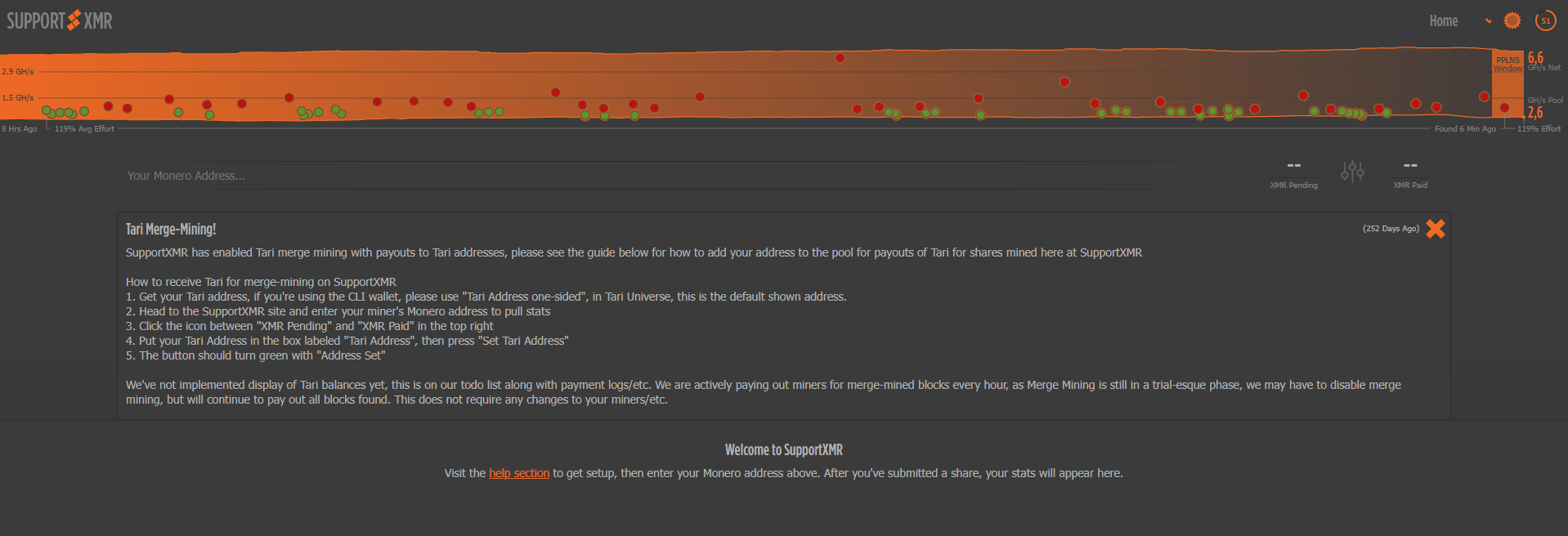
SupportXMR distinguishes itself by prioritizing CPU miners, a commitment reflected in its technical infrastructure and fee structure. This focus makes it an exceptionally strong choice for anyone leveraging consumer-grade processors, from a single home PC to a small dedicated rig.
Why SupportXMR is a Top Choice for CPU Mining
The pool’s architecture is intentionally streamlined for CPU efficiency. Unlike pools that cater primarily to high-hashrate GPU or ASIC farms, SupportXMR provides a dedicated port optimized for the hashrate characteristics of typical CPUs. This ensures stable connections and fair share attribution for lower-power hardware.
Key Operational Details:
| Feature | Specification | Impact for CPU Miners |
|---|---|---|
| Pool Fee | 0.6% | Maximizes long-term profitability by keeping operational costs very low. |
| Reward System | PPLNS (Pay Per Last N Shares) | Rewards loyal, consistent miners. Ideal for rigs with high uptime. |
| Minimum Payout | 0.1 XMR | Accessible for miners with lower hashrates, ensuring regular payouts. |
| CPU-Specific Port | 3333 | Simplifies miner configuration and provides a stable connection for CPUs. |
Practical Benefits and Strategic Advantages
The most significant advantage of SupportXMR is its extremely low 0.6% fee. Over time, this small percentage translates into substantially higher take-home rewards compared to pools charging 1% or more. This is a critical factor for CPU mining, where profit margins can be narrower than with more powerful hardware.
The PPLNS reward model is another strategic element. While it can introduce short-term variance for miners who connect intermittently, it strongly benefits those who maintain consistent uptime. By basing payouts on the last ‘N’ shares submitted before a block is found, it discourages pool-hopping and rewards long-term loyalty. If you plan to run your CPU miner 24/7, this model is designed to work in your favor.
Utilizing the MiningPoolStats Profile for Decision-Making
The SupportXMR profile on MiningPoolStats is an indispensable tool for due diligence. It aggregates critical, real-time metrics in one place, allowing you to:
- Verify Uptime and Reliability: Before committing your hashrate, you can review historical uptime data to ensure the pool is stable.
- Monitor Pool Hashrate: Track the pool’s share of the total network hashrate to gauge its block-finding frequency.
- Access Clear Setup Instructions: The profile provides the exact stratum addresses and port numbers needed for configuration. For those new to the process, MiningPoolStats also provides excellent guides on how to join a crypto mining pool.
This transparent, data-first approach empowers you to make an informed decision based on verifiable performance rather than just marketing claims. In summary, SupportXMR’s combination of a CPU-optimized port, an ultra-low fee, and a loyalty-driven PPLNS system creates a highly synergistic environment for dedicated Monero CPU miners seeking to maximize long-term profitability.
Pros:
- CPU-Optimized Setup: The dedicated port (
3333) simplifies configuration for CPU miners. - Very Low Pool Fee: The 0.6% fee significantly boosts take-home rewards.
- Transparent Statistics: Real-time data on MiningPoolStats helps evaluate reliability.
- PPLNS Rewards Loyalty: Benefits miners with consistent, long-term hashrate contribution.
Cons:
- PPLNS Variance: Can lead to less predictable payouts for intermittent miners.
- Monero-Specific: Focused solely on the RandomX algorithm for XMR.
Website: https://miningpoolstats.net/pools/supportxmr/
2. MiningPoolStats – Monero (XMR) pool comparison and live metrics
Before you can join a mining pool, you first have to choose one. MiningPoolStats is not a mining pool itself, but an indispensable third-party aggregator and analytics platform. It serves as a crucial starting point for any CPU miner, especially those focusing on privacy coins like Monero (XMR), which remains one of the most profitable and popular options for a mining pool cpu setup. The platform’s primary function is to consolidate live data from dozens of active Monero pools into a single, easy-to-compare dashboard.
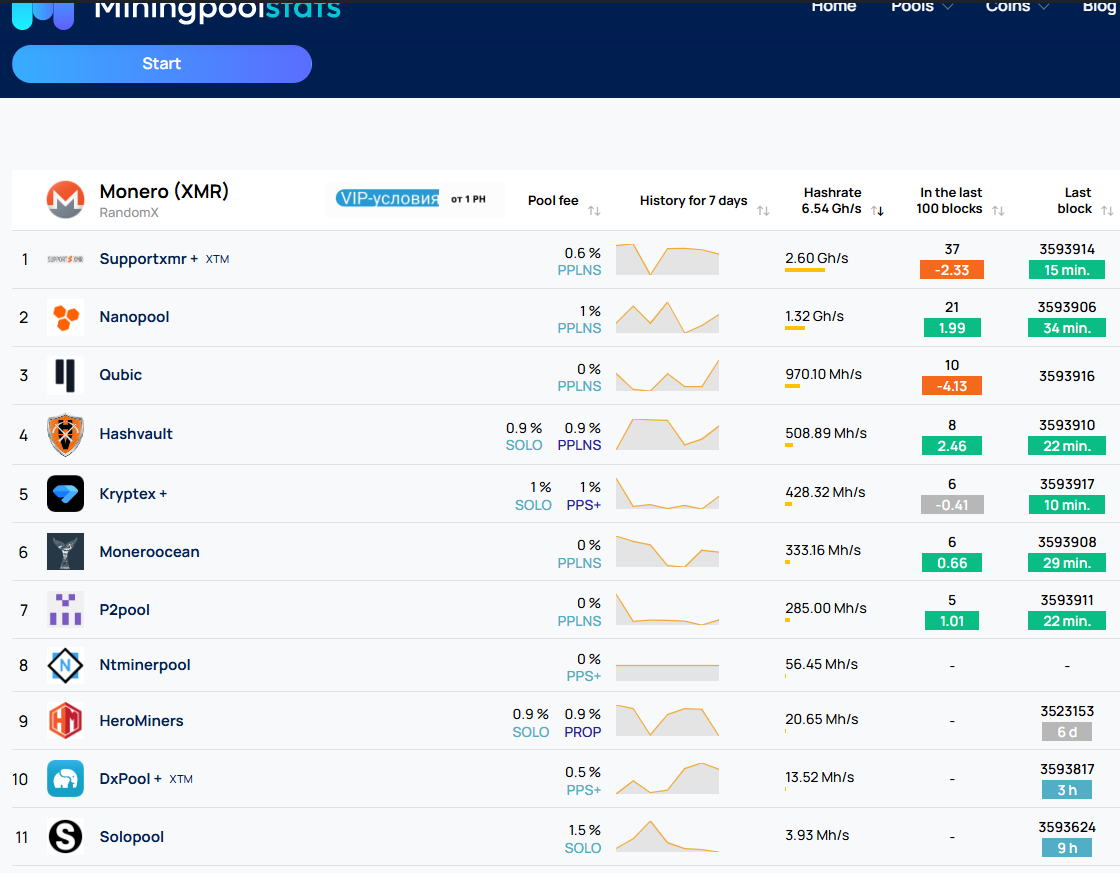
This tool eliminates the tedious process of visiting each pool’s website individually to gather critical information. Instead, it presents a comprehensive, sortable table that allows you to quickly evaluate pools based on key metrics. This comparative analysis is essential for optimizing your mining profitability and ensuring you connect to a reliable service. The user interface is data-dense but clean, prioritizing function over form to deliver actionable insights efficiently.
Key Features and Strategic Use
MiningPoolStats provides a wealth of data points that are critical for making an informed decision. Here’s how you can leverage its features to your advantage:
- Live Pool Comparison: The main dashboard lists active Monero pools with sortable columns for hashrate, number of miners, pool fee, minimum payout, and payout scheme (e.g., PPLNS, PROP). This allows you to instantly identify pools that match your specific needs, whether you prioritize low fees or a low payout threshold.
- Hashrate and Block Distribution: You can view a pool’s recent hashrate history and its share of the total network hashrate. This is vital for assessing a pool’s consistency and avoiding pools that are nearing a 51% majority, which can pose a security risk to the network.
- Network Metrics and Calculators: The platform displays live network data such as total hashrate, difficulty, and block reward. It often includes earnings calculators that help you estimate potential income based on your CPU’s hashrate, a pool’s fee, and current network conditions.
- Direct Links and Resources: Each pool listing includes a direct link to the pool’s official website, saving you time and ensuring you land on the correct page. This central hub approach simplifies the research phase significantly.
Expert Tip: Use the 7-day hashrate chart for each pool to gauge its stability. A pool with a highly volatile hashrate might result in less predictable payouts, even if its fees are low. Aim for a pool that shows consistent growth or a stable plateau.
While the platform is an exceptional research tool, it’s important to remember that it relies on data from third-party APIs. Occasionally, this data might lag or contain slight inaccuracies compared to a pool’s native dashboard. Always cross-reference the key stats on the pool’s official site before configuring your miner. To broaden your understanding of what makes a coin profitable, you can explore more on profitable altcoin mining and apply those principles to your pool selection.
In conclusion, MiningPoolStats is a must-use free resource for researching, comparing, and selecting the best mining pool for your CPU before you commit your hashrate.
Official Website: https://miningpoolstats.net/coins/monero/
3. GetMonero.org – Official Monero CPU mining and P2Pool guides
For anyone serious about CPU mining, the official Monero website, GetMonero.org, is an essential, canonical resource. While not a mining pool itself, it provides the foundational knowledge, security best practices, and software recommendations directly from the project’s core contributors. It serves as the authoritative starting point for understanding why Monero’s RandomX algorithm is specifically designed to be efficient for a mining pool cpu setup and resistant to specialized hardware like ASICs.
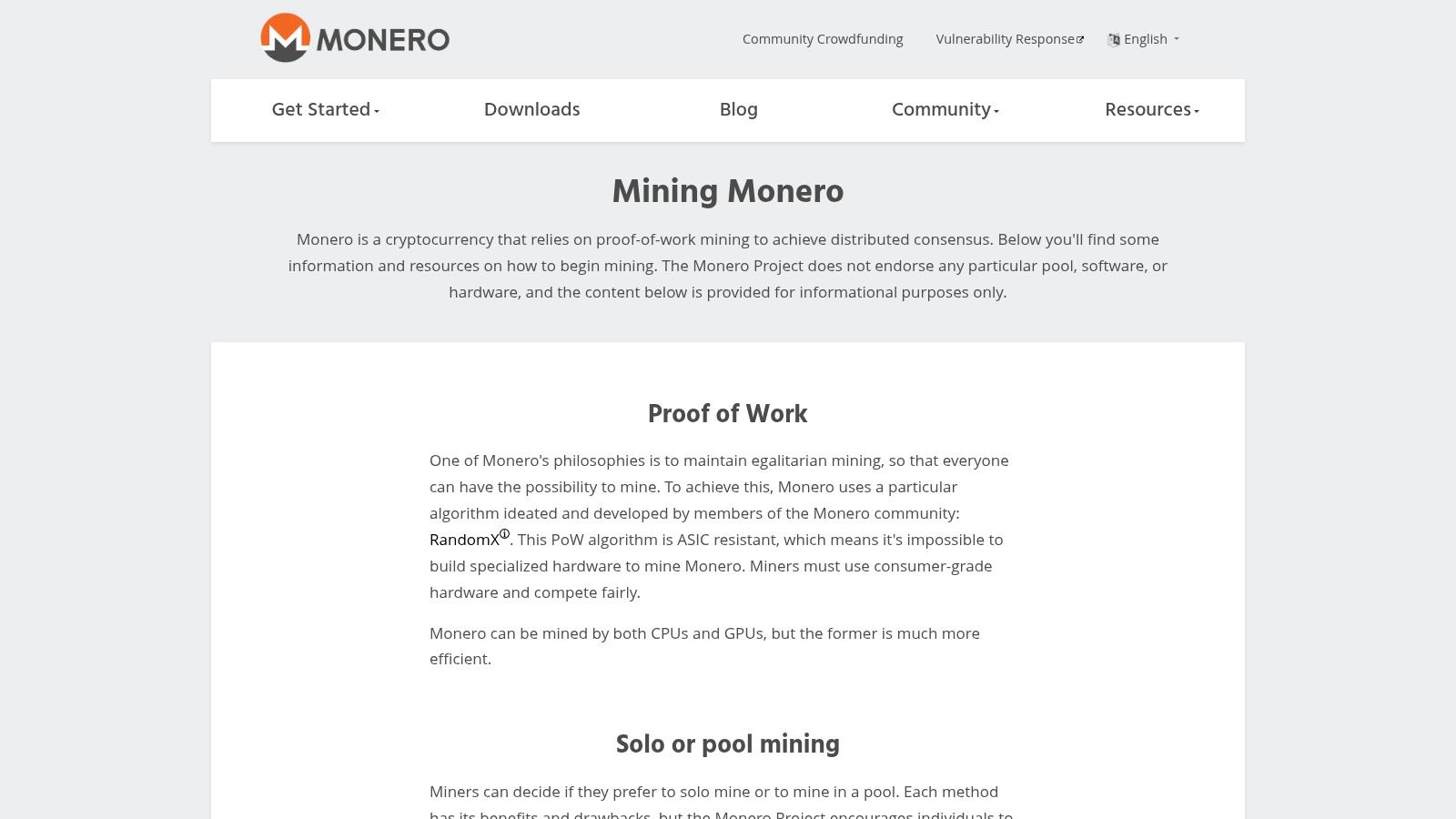
This platform cuts through the noise and commercial interests often found on other crypto sites. It delivers unbiased, up-to-date information on how to get started, from setting up a secure wallet to choosing the right mining software. For newcomers, its clear, concise documentation demystifies the process, while experienced miners can rely on it for the latest official recommendations and security advisories. The user experience is clean and focused on education, ensuring you build your mining operation on a solid, secure foundation.
Key Features and Strategic Use
GetMonero.org is designed to empower miners with knowledge rather than offering a direct service. Here’s how to leverage its resources for a successful mining experience:
- Official CPU Mining Guidance: The site offers a dedicated mining section that explains the RandomX algorithm, its CPU-centric nature, and general hardware requirements. This is the best place to get accurate, non-commercial information on what makes a CPU effective for mining Monero.
- P2Pool Documentation: It prominently features and provides guides for P2Pool, a decentralized, peer-to-peer mining pool. This allows miners to pool their hashrate without relying on a centralized operator, which enhances network security and often results in lower effective fees.
- Verified Miner Software: The platform lists and links to reputable, community-vetted mining software like XMRig. This helps you avoid malicious or inefficient software, ensuring your hardware is used safely and effectively.
- Wallet and Security Best Practices: Before you can mine, you need a secure wallet. GetMonero.org provides comprehensive guides on creating, securing, and using the official Monero wallets, which is a critical first step that many third-party guides overlook.
Expert Tip: Start your journey by reading the P2Pool documentation on GetMonero.org. While traditional pools are simpler to set up, P2Pool offers a more decentralized and potentially more profitable alternative by eliminating the central pool operator. Understanding how it works can give you a strategic advantage.
As a non-commercial, informational resource, GetMonero.org doesn’t host pools or sell any products. Its sole purpose is to educate and guide the community. You will still need to choose and configure your miner and pool connection based on the knowledge you gain. Essentially, it is the most trustworthy and accessible starting point for any prospective Monero CPU miner.
Official Website: https://www.getmonero.org/get-started/mining/
4. XMRig – Official high-performance CPU miner for RandomX
Once you have selected a cryptocurrency and a mining pool, you need the actual software to connect your hardware to the network. XMRig is the industry-standard, open-source CPU mining software, especially for algorithms like RandomX, which powers Monero. While not a mining pool cpu service itself, XMRig is the essential client-side application that executes the mining operations on your computer and directs your hashrate to the pool of your choice. Its widespread adoption is due to its high performance, reliability, and broad compatibility.
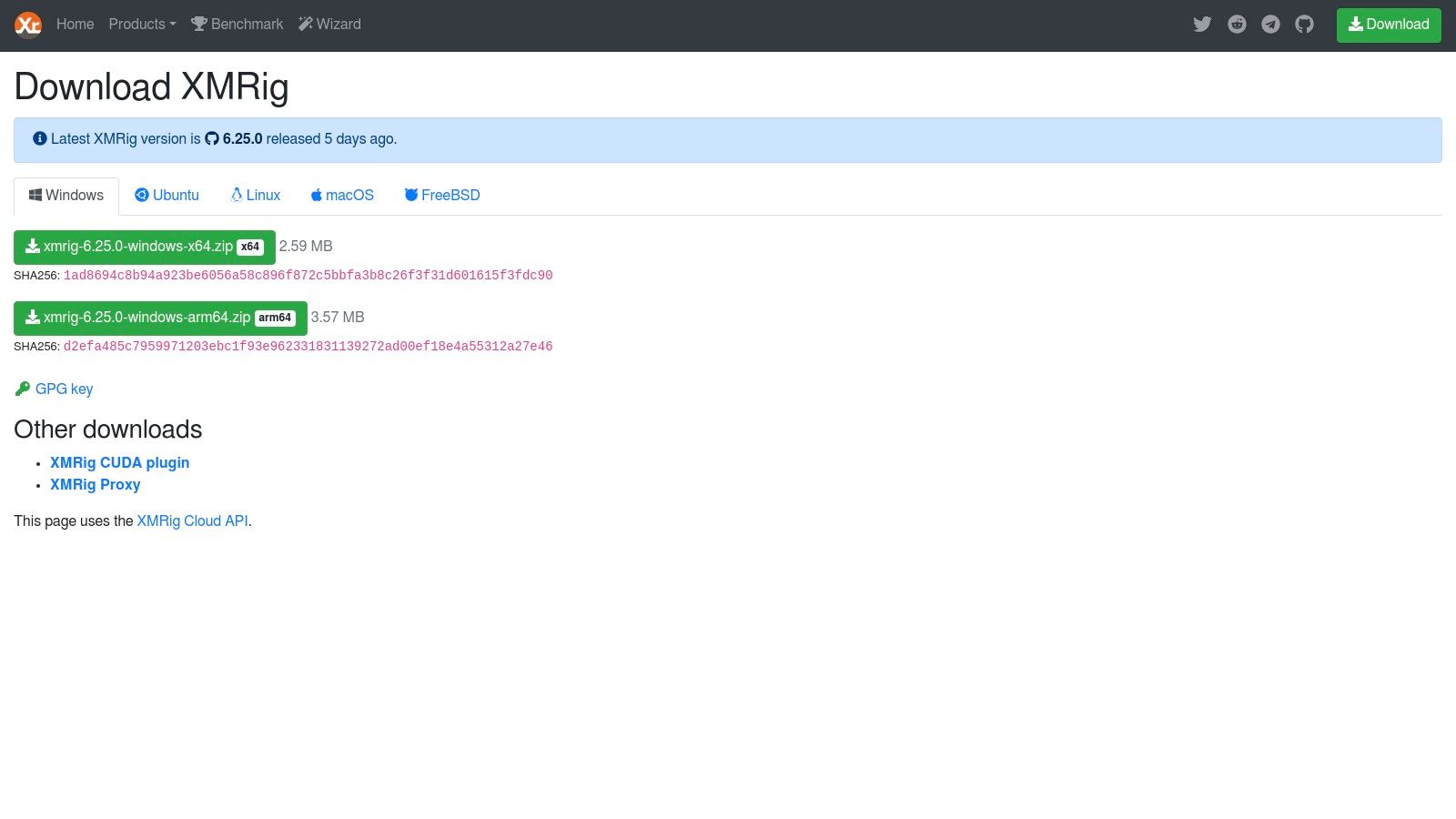
The official XMRig website is the central hub for downloading the latest versions, accessing documentation, and generating configurations. It provides a clean, no-nonsense interface focused on getting miners up and running quickly and securely. By offering pre-compiled binaries for Windows, Linux, macOS, and FreeBSD, it caters to virtually every type of home miner and professional operator. The platform’s emphasis on official releases with checksums ensures users can download the software safely, avoiding malicious versions that could steal hashrate or compromise system security.
Key Features and Strategic Use
XMRig is a powerful tool with features designed for both beginners and advanced users. Understanding these features is key to maximizing your CPU’s mining potential.
- Optimized CPU Performance: XMRig is highly optimized for modern CPU architectures (x86/x64, ARM) and excels at the RandomX algorithm. It includes auto-configuration options that attempt to find the best settings for your specific processor, but it also allows for deep manual tuning for advanced users seeking to squeeze out every last hash.
- Configuration Wizard: For newcomers, the website features a “Wizard” that generates a ready-to-use JSON configuration file. You simply input your pool’s address, your wallet address, and a few other parameters, and the wizard creates the file for you. This dramatically lowers the barrier to entry.
- Community and Documentation: As the most popular CPU miner, it benefits from a massive community and extensive documentation. If you encounter an issue, chances are a solution is readily available in forums or guides. This strong support network is invaluable for troubleshooting and optimization.
- Flexibility and Control: The software can be configured to connect to any standard mining pool, including decentralized options like P2Pool. Its configuration file and command-line options provide granular control over threads, CPU affinity, and other performance-critical settings.
Expert Tip: To maximize hashrate, ensure you run XMRig with administrator or root privileges. This allows the software to enable “huge pages” in memory, a critical feature for the RandomX algorithm that can boost performance by 20-30% on compatible systems.
XMRig is free to download and use, but it does include a default 1% developer fee, where it briefly mines for the developers to support the project. While this can be changed in the configuration or removed by compiling the source code yourself, supporting the developers is encouraged. To summarize, XMRig is the best tool for the job of actually performing the work of mining on your CPU. For those just getting started, you can find a comprehensive guide on what you’ll need; check out our overview on how to start crypto mining for more details.
Official Website: https://xmrig.com/download
5. P2Pool – Decentralized Monero mining (main/mini/nano)
P2Pool offers a fundamentally different approach to crypto mining, positioning itself as a decentralized, peer-to-peer solution for Monero (XMR). Unlike traditional centralized pools where a single operator controls the payout process, P2Pool creates a sidechain where miners collaborate to find blocks and receive payouts directly to their own wallets. This trustless system eliminates the need for a central pool operator, which in turn removes pool fees and custodial risk, making it an increasingly popular choice for a secure mining pool cpu setup.
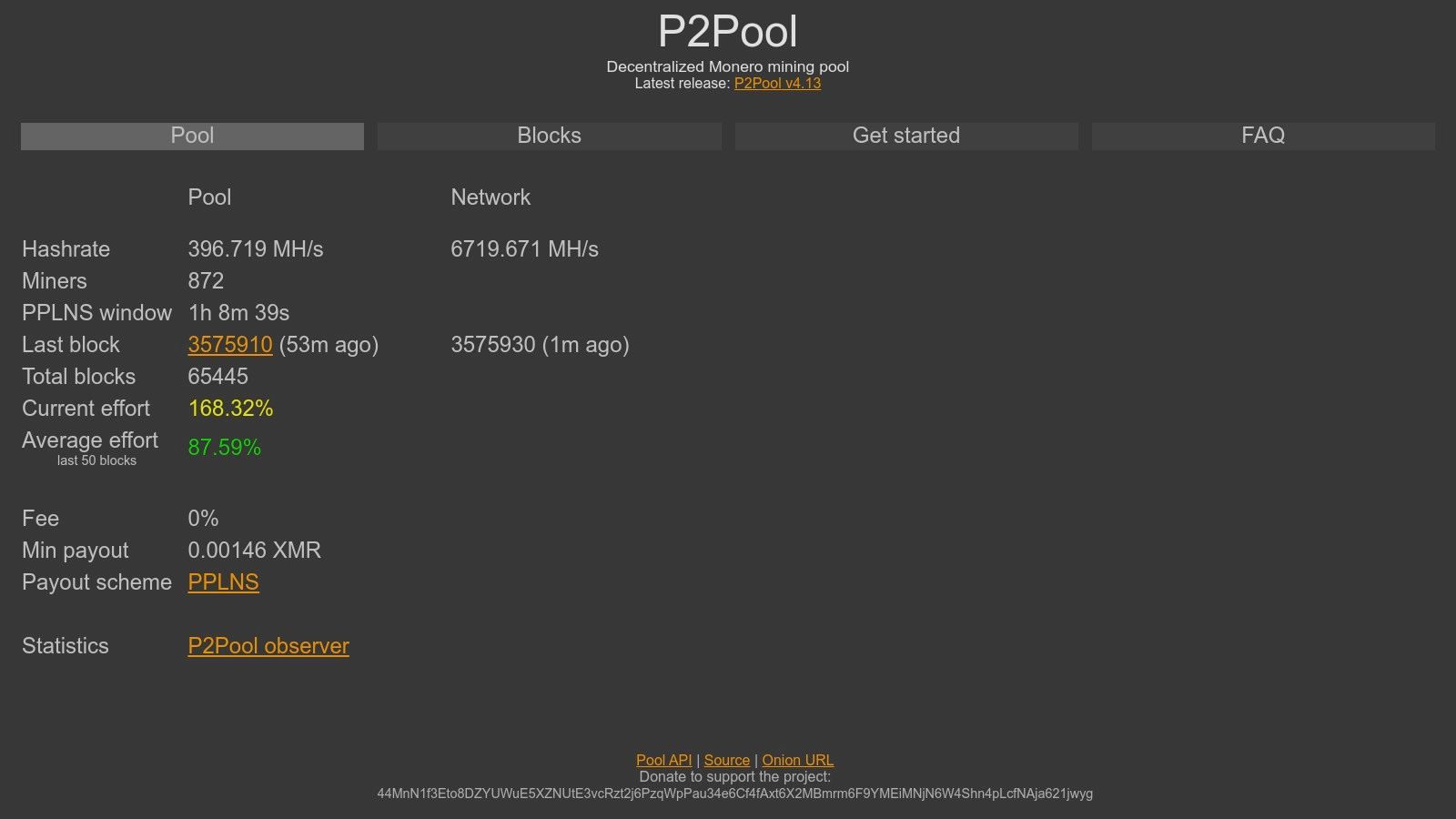
This model directly addresses the centralization concerns that plague many cryptocurrencies. By connecting your miner to a local or remote P2Pool node, you contribute your hashrate to a collective effort while maintaining full control over your funds. Payouts are sent directly via the Monero blockchain as soon as a block is found by the pool, making the process transparent and immediate. The platform’s website provides comprehensive guides and an observer tool to monitor the pool’s status.
Key Features and Strategic Use
P2Pool’s unique architecture provides several strategic advantages for the security-conscious and technically inclined miner. Here’s how to leverage its features:
- Trustless and Non-Custodial Mining: The primary benefit is the elimination of a central point of failure. There is no pool wallet holding your funds, meaning you are not vulnerable to pool hacks or dishonest operators. Payouts go directly from the coinbase transaction to your personal wallet.
- 0% Pool Fee: Since there is no central entity to maintain, P2Pool has a 0% fee structure. Miners only pay the standard Monero network transaction fees for their payouts, maximizing their earnings.
- Mini and Nano Modes: To accommodate miners with lower hashrates, P2Pool has “mini” and “nano” sidechains. These versions have a lower difficulty, allowing smaller miners to find shares more frequently and receive more regular payouts, even if the amounts are smaller. This makes the platform accessible to those with just one or two consumer-grade CPUs.
- Enhanced Network Decentralization: By participating in P2Pool, you are actively contributing to the decentralization and security of the Monero network. This helps prevent any single entity from gaining too much control over the network’s total hashrate.
Expert Tip: Getting started with P2Pool requires running your own Monero node or connecting to a trusted public remote node. For optimal security and to support the network, running a full node is recommended. Use the official P2Pool software alongside XMRig for a seamless connection.
While P2Pool offers unparalleled security and decentralization, its setup process is more technically involved than that of a conventional pool. In short, P2Pool is the ideal choice for miners who prioritize decentralization and are willing to invest more time in the initial setup for a more secure, non-custodial mining experience.
Official Website: https://p2pool.io/
6. Nanopool – Centralized Monero pool with US servers
Nanopool is a long-standing and reputable mining pool that offers dedicated support for Monero (XMR), making it a solid choice for those getting started with a mining pool cpu configuration. As a centralized pool, it provides a straightforward and user-friendly experience, abstracting away the complexities associated with more decentralized options. Its primary appeal lies in its simplicity, comprehensive documentation, and reliable infrastructure, including dedicated servers for US-based miners, which helps reduce latency and improve share submission rates.
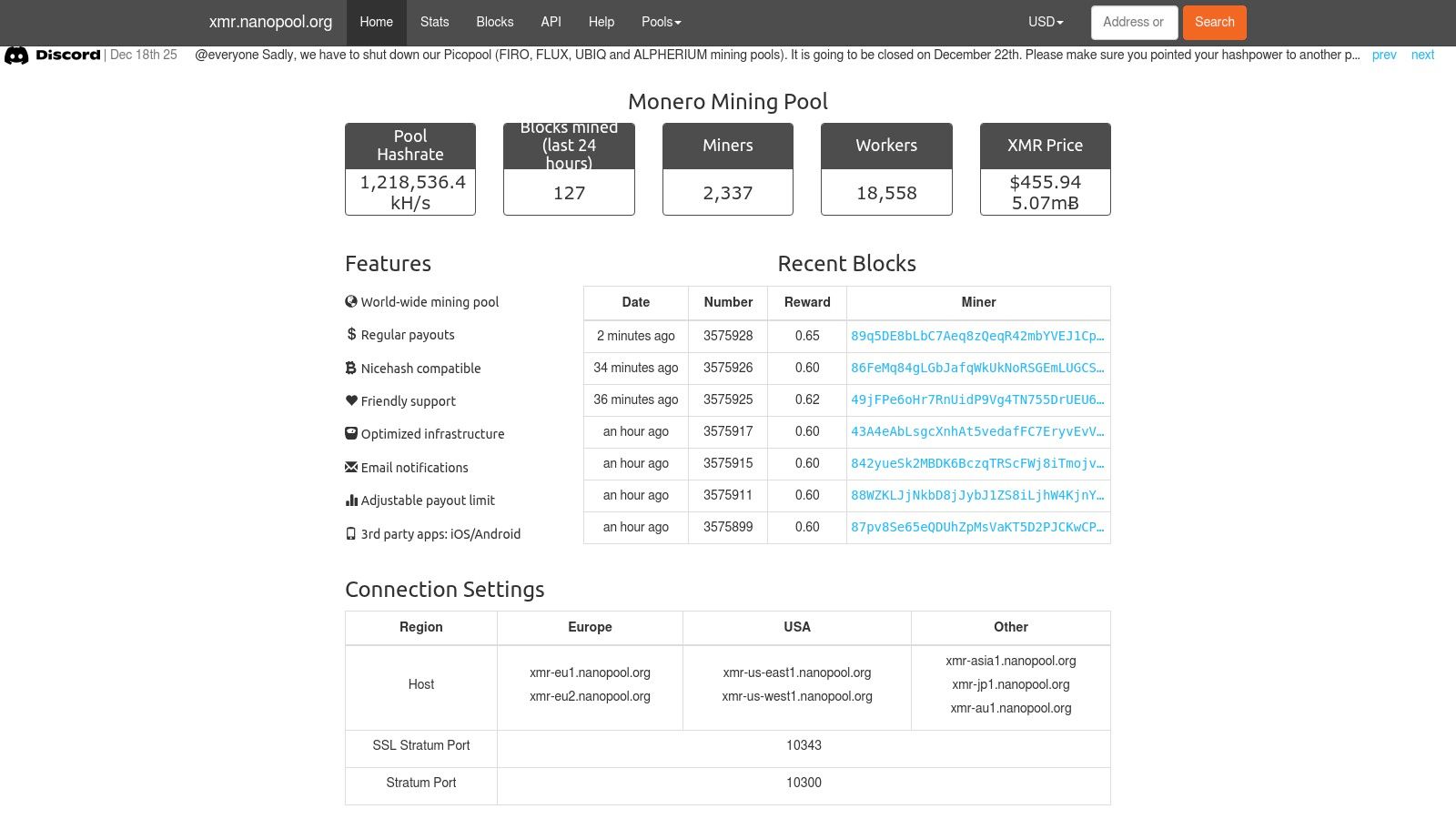
The platform is designed to get miners up and running quickly, offering detailed guides and copy-paste configuration examples for popular mining software like XMRig and its proprietary Nanominer. This focus on ease of use makes it an excellent entry point for newcomers who want to start mining without a steep learning curve. The user interface is clean, providing clear statistics on your hashrate, workers, and estimated earnings without overwhelming you with excessive data.
Key Features and Strategic Use
Nanopool offers a focused set of features designed for reliability and ease of access. Here’s how to leverage its platform for effective CPU mining:
- Regional Server Endpoints: Nanopool provides multiple stratum servers, including US East and West coast locations. Connecting to the server closest to your geographical location minimizes latency, which can lead to fewer stale shares and a slight increase in overall profitability. Always use the closest endpoint for your mining rig.
- PPLNS Payout Scheme: The pool operates on a Pay-Per-Last-N-Shares (PPLNS) model with a competitive 1% fee. This system rewards loyal miners who contribute consistently to the pool over time, as payouts are calculated based on the shares you submitted during the last N rounds it took to find a block.
- Configurable Payouts: While there is a default minimum payout, Nanopool allows you to adjust this threshold within a specific range. This flexibility is useful for miners who want to receive their earnings more or less frequently, depending on their hashrate and personal strategy.
- Comprehensive Help Center: The platform includes a detailed Help Center with setup guides for different miners and operating systems. These articles provide step-by-step instructions and example configurations, significantly simplifying the initial setup process for beginners.
Expert Tip: Start with the default minimum payout threshold. If you find you are mining intermittently or with a very low hashrate, consider raising the threshold to avoid accumulating many small transaction fees when you withdraw from your wallet. Conversely, if you prefer more frequent payouts, you can lower it once you confirm your setup is stable.
While Nanopool’s centralized nature means you trust the operator with block rewards before they are distributed, it is a well-established entity with a long track record of reliability. The trade-off is a much simpler user experience compared to decentralized alternatives like P2Pool. To sum it up, its combination of clear documentation, US-based servers, and a simple interface makes it a strong contender for any CPU miner, particularly those located in North America.
Official Website: https://xmr.nanopool.org/
7. MiningRigRentals – Rent RandomX CPU hashpower on demand
MiningRigRentals offers a unique approach to CPU mining by allowing you to rent processing power on demand rather than joining a pool with your own hardware. This marketplace connects rig owners with miners who want to temporarily lease hashrate. For those exploring a mining pool cpu strategy without significant upfront investment, this platform provides a flexible way to direct substantial RandomX (Monero) hashrate to any pool of your choice, including decentralized P2Pool nodes. It’s an ideal solution for testing a pool’s performance, smoothing out payout variance, or scaling up your mining power during favorable market conditions.
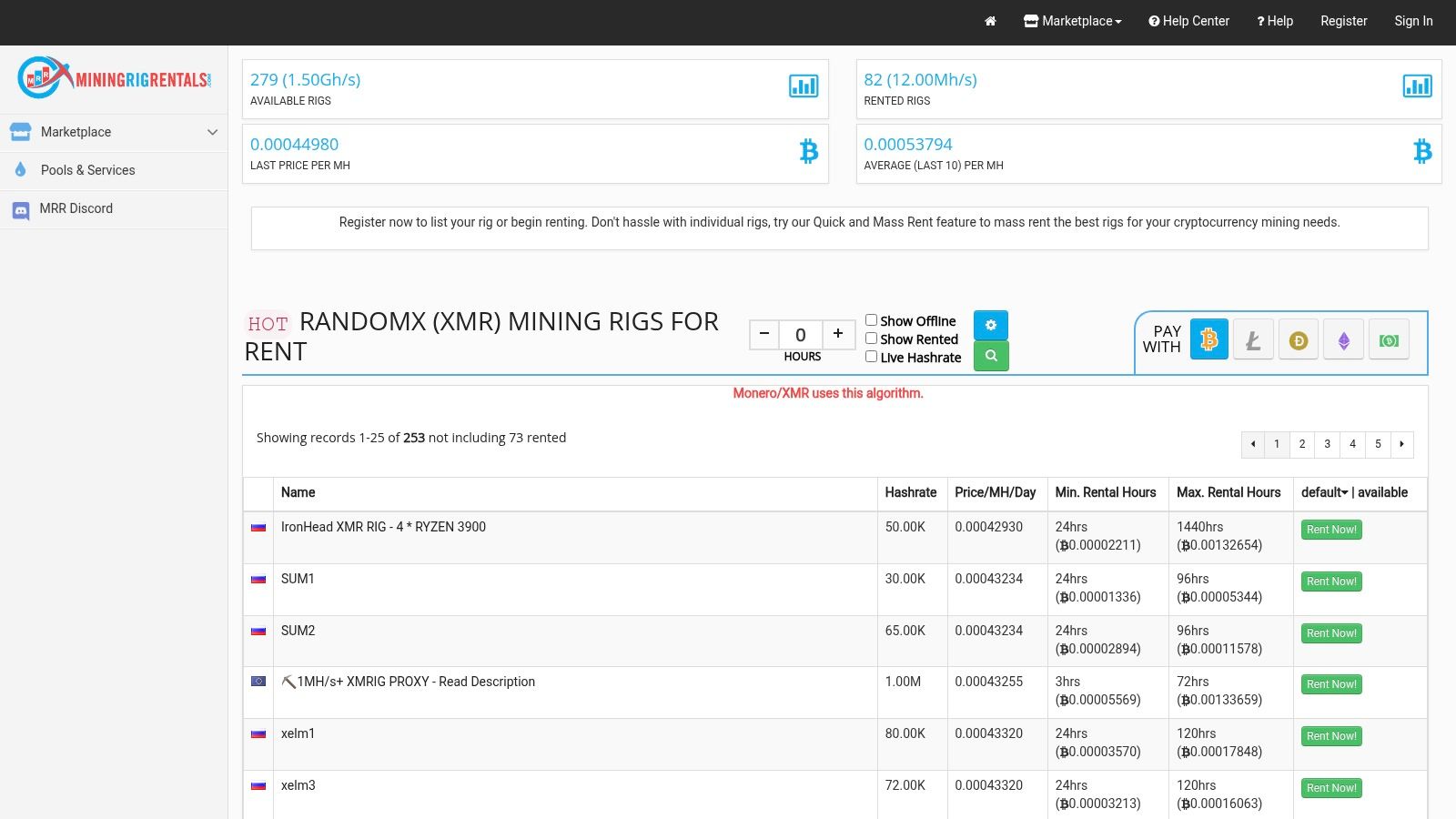
The platform functions as a peer-to-peer marketplace where you can browse available CPU rigs, see their verified hashrates, and check their rental prices, which are typically listed per megahash per day (MH/s/day). You can rent a rig for as little as a few hours, giving you precise control over your spending and mining duration. This model decouples the act of mining from hardware ownership, making it a powerful tool for strategic miners who want to react quickly to changes in network difficulty or coin price.
Key Features and Strategic Use
MiningRigRentals is not just a rental service; it’s a strategic tool for hashrate allocation. Here’s how to use its features effectively:
- Live Rig Marketplace: The RandomX section provides a real-time list of available CPU rigs. You can filter them by hashrate, price, and owner reputation score. This transparency allows you to find the best value for your budget and rent the exact amount of power you need.
- Flexible Pool Pointing: Once you rent a rig, you can configure it to mine on any pool you desire. Simply enter the pool’s stratum address, your wallet address, and a password. This is perfect for A/B testing two different pools to see which one yields better returns with the same amount of hashrate.
- Short-Term Contracts: The ability to rent by the hour means you aren’t locked into long-term commitments. This is useful for short-term speculative mining or for adding a burst of hashrate to a small pool to help find a block and generate a payout faster.
- Transparent Pricing and Control: All costs are laid out before you confirm a rental. You fund your account with supported cryptocurrencies and can monitor the rented rig’s performance directly through the platform’s dashboard, ensuring you get the hashrate you paid for.
Expert Tip: Before renting a large amount of hashrate, perform a small test rental with a rig from a highly-rated owner. Direct it to your chosen pool and confirm that the hashrate is correctly reported on the pool’s dashboard. This small step helps verify the rig’s performance and prevent potential issues with larger rentals.
While the platform offers incredible flexibility, its effectiveness is tied to market dynamics. Rental prices fluctuate based on supply and demand, and profitability is not guaranteed. Ultimately, MiningRigRentals is a powerful but advanced tool for strategic miners who want to leverage hashrate without owning the hardware.
Official Website: https://www.miningrigrentals.com/rigs/randomx
CPU Mining Resource Comparison
This table provides a quick summary to help you compare the different resources and tools discussed in this article.
| Resource | Type | Best For | Key Advantage |
|---|---|---|---|
| SupportXMR | Centralized Pool | Hobbyists & consistent miners | Ultra-low 0.6% fee |
| MiningPoolStats | Analytics Platform | All miners (research phase) | Live, comparable data for all pools |
| GetMonero.org | Educational Hub | Beginners & security-focused users | Official, trustworthy information |
| XMRig | Mining Software | All miners (execution phase) | Highest RandomX performance |
| P2Pool | Decentralized Pool | Technical & decentralization advocates | 0% fee and non-custodial payouts |
| Nanopool | Centralized Pool | Beginners & US-based miners | Ease of use and regional servers |
| MiningRigRentals | Hashrate Marketplace | Strategic miners & testers | Renting hashpower without hardware |
Your Next Steps to Profitable CPU Mining
The journey through the world of CPU mining pools and tools reveals a landscape rich with options, each catering to a distinct type of miner. We’ve dissected everything from large, centralized pools like SupportXMR and Nanopool to the innovative, decentralized P2Pool. We’ve also explored the essential software that powers your hardware, like the high-performance XMRig, and the analytical platforms like MiningPoolStats that guide your strategy. Your path forward isn’t about finding a single “best” option; it’s about synthesizing this information to build a profitable and sustainable mining operation tailored to your specific circumstances.
The central takeaway is that a strategic choice is an informed choice. For newcomers or those who value a “set it and forget it” approach, the stability and predictable payouts of a well-regarded centralized pool are hard to beat. Conversely, for the technically adept miner who champions decentralization and wants to minimize trust, P2Pool offers a compelling, albeit more hands-on, alternative. The core of any successful endeavor in this space is aligning your choice of mining pool CPU resources with your personal goals, risk tolerance, and technical comfort level.
Synthesizing Your Strategy: From Theory to Hashrate
To move from analysis to action, you need a clear, methodical plan. Blindly pointing your hashpower at the first pool you find is a recipe for missed profits and frustration. Instead, use the insights from this guide to build a personalized action plan.
Here are your immediate next steps:
- Define Your Miner Profile: Are you a hobbyist running a single desktop, a professional managing multiple rigs, or an investor exploring hashpower rentals? Your profile dictates your priorities. A hobbyist might prioritize low minimum payouts, while a farm operator will be more sensitive to pool fees and uptime.
- Shortlist Your Top 2-3 Pools: Based on your profile, select a few promising candidates. If your focus is Monero, you might compare SupportXMR for its strong community reputation, Nanopool for its established infrastructure, and P2Pool for its decentralized ethos.
- Conduct a Live Data Check: Before committing, visit MiningPoolStats. Review the real-time hashrate, active miners, and recent block discovery times for your shortlisted pools. A pool’s historical performance is a strong indicator of its future reliability.
- Configure and Test: Download and configure XMRig. This is a non-negotiable step for maximizing your hardware’s performance. Run your miner on your top-choice pool for a set period, perhaps 24 to 48 hours, to establish a baseline performance metric.
- Analyze and Iterate: After the test period, check your pool dashboard. How does your reported hashrate compare to your local hashrate? Are the estimated earnings aligning with your expectations? If the results are unsatisfactory, switch to the second pool on your list and repeat the process. This empirical approach removes guesswork and grounds your decision in hard data.
The Final Calculation: Profitability, Security, and Your Time
Ultimately, your decision rests on three pillars: profitability, security, and the value of your time. Centralized pools offer convenience, saving you time at the cost of a small fee and a degree of trust. Decentralized options like P2Pool enhance security and network health, but demand more of your time for setup and maintenance.
Key Insight: The most profitable mining pool CPU setup is not always the one with the lowest fee. It’s the one that offers the best combination of reliable payouts, high uptime, strong security, and a user experience that matches your technical skill level.
As you embark on or continue your CPU mining journey, remember that this is a dynamic field. Pools rise and fall, new coins gain traction, and mining software is constantly updated. The most successful miners are those who remain curious, continue learning, and are willing to adapt their strategy based on new information. The tools and platforms we’ve covered are your gateway to a rewarding and profitable venture. Choose them wisely, test them thoroughly, and let the hashing begin.
Frequently Asked Questions (FAQ)
Is CPU mining still profitable in 2026?
Yes, for specific cryptocurrencies. While you can’t profitably mine Bitcoin with a CPU, coins with ASIC-resistant algorithms like Monero (RandomX) are designed for it. Profitability depends on your CPU’s efficiency, electricity cost, and the coin’s market price. Using a low-fee mining pool CPU setup is crucial to maximizing returns.
What is the best CPU for mining?
The best CPUs for mining coins like Monero are typically those with a large L3 cache and a high core/thread count. AMD’s Ryzen series, especially the Ryzen 9 and Threadripper lines, are highly regarded for their RandomX performance. Intel’s high-end Core i9 processors can also be effective.
Can I mine on a laptop CPU?
While you technically can, it’s generally not recommended. Laptop cooling systems are not designed for the sustained, high-intensity workload of mining. Running a miner on a laptop for extended periods can lead to thermal throttling (reduced performance) and may shorten the lifespan of the hardware.
How do mining pools pay you?
Mining pools use different payout schemes. The most common for CPU mining is PPLNS (Pay Per Last N Shares), which rewards miners based on the shares they submitted during the last N rounds before a block was found. This system rewards loyal, consistent miners. Payouts are sent to your crypto wallet address once you reach the pool’s minimum payout threshold.
Is P2Pool better than a centralized pool?
“Better” depends on your priorities. P2Pool is better for decentralization, security (non-custodial), and has a 0% fee. However, it’s more complex to set up and may have more variable payouts for small miners. Centralized pools are much easier to join and offer more predictable, regular payouts, making them better for beginners.